
Water over the edge
Blockage, slope, outlet capacity, or damage may need a closer look.
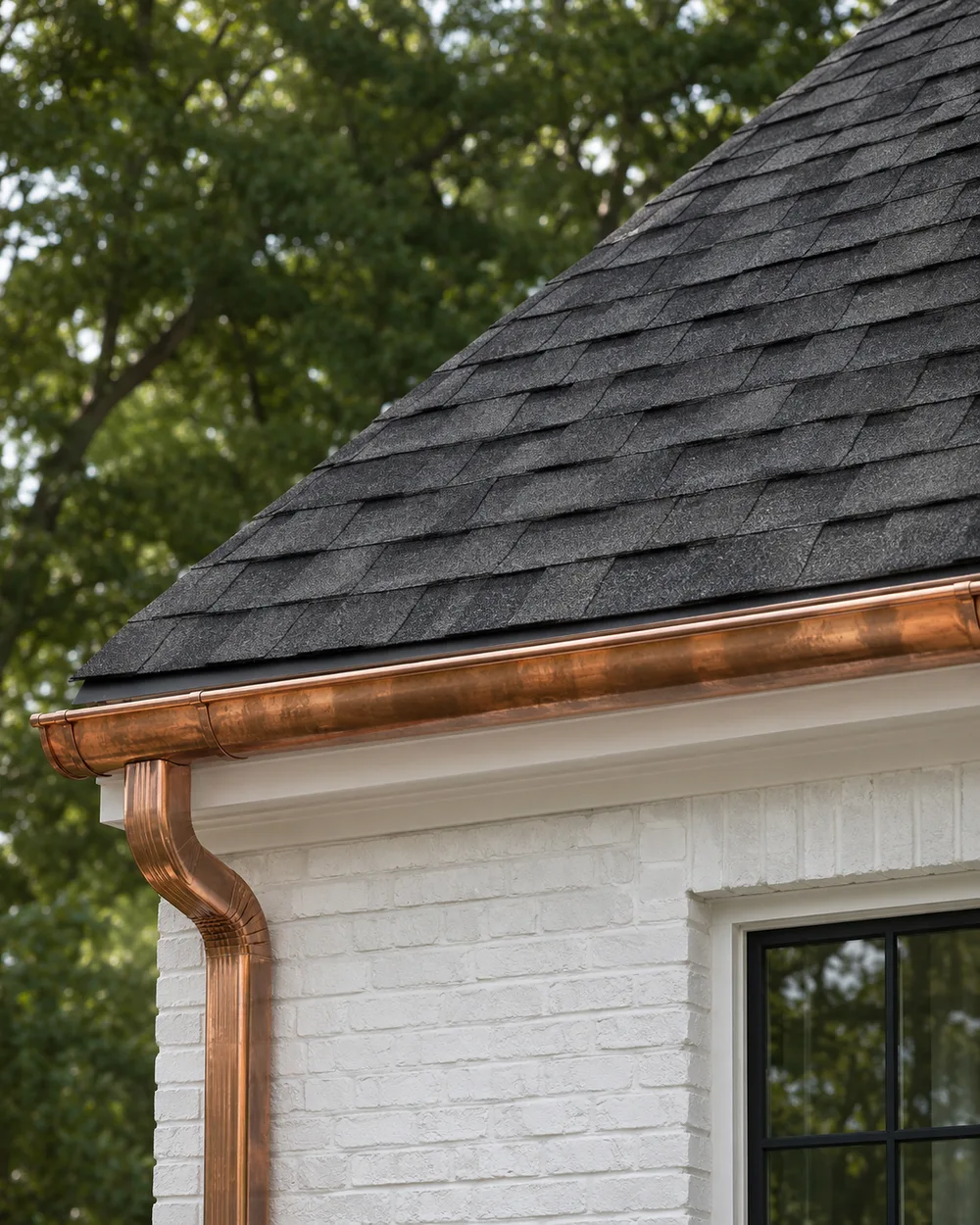 THE EDGE MAKES A DIFFERENCE.
ONE CONTINUOUS ROUTE
Collect runoff at the roof edge. Consider gutter profile, roof geometry, and the amount of water being managed.
Blockage, slope, outlet capacity, or damage may need a closer look.
Connections and end details are useful places to begin an assessment.
Look at the discharge route as well as the gutter itself.
AFTER THE DOWNSPOUT

Water has to go somewhere. Review the discharge point and surrounding ground alongside the gutters above.
Consider where downspouts terminate and whether the intended route stays clear.
Walkways, landscaping, adjacent surfaces, and grade all affect the conversation.
Note pooling, overflow, or changes after rain without going onto the roof or approaching unsafe areas.
DRAINAGE THROUGH THE YEAR
Small observations help you start a useful conversation. Keep your checks at ground level and arrange professional access when needed.
From a safe ground-level position, look for new debris, displaced materials, and changes around the gutters. Indoors, note any water marks that appeared during rain.
THINK ABOUT THE EDGE TOGETHER
Roof removal, edge details, fascia condition, gutter placement, and downspouts can overlap. Discuss what stays, what changes, and which work is included in the scope.
Plan the roof and its edgesA FEW DETAILS, BEFORE YOU DECIDE
Not necessarily. Blockages, alignment, outlet issues, and other factors may contribute. An assessment helps identify the right response.
No system eliminates the need for checks. Debris and roof conditions still need attention, and maintenance depends on the product and surrounding trees.
Yes. Coordinating roof edges, fascia conditions, and gutters can help define a more complete project scope.